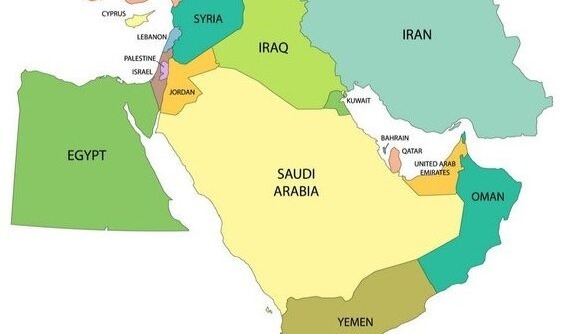
MIDDLE EAST
The Middle East, a region rich in history and cultural diversity, encompasses countries such as Saudi Arabia, Iran, Iraq, Israel, Jordan, Lebanon, Syria, the United Arab Emirates, and others.
Often referred to as the cradle of civilization, it is the birthplace of major world religions, including Judaism, Christianity, and Islam, which deeply influence its cultural and social landscapes.
Saudi Arabia, home to Mecca and Medina, is the epicenter of Islam.
Its vast deserts and modern cities like Riyadh and Jeddah contrast with ancient heritage sites, including the Nabatean city of Al-Ula.
The Kingdom's recent Vision 2030 initiative aims to diversify its economy while preserving its rich cultural heritage.
Iran boasts a deep historical legacy, with Persian civilization dating back thousands of years.
Its majestic architecture, such as the stunning mosques of Isfahan and the ruins of Persepolis, reflect a blend of artistry and history.
The country's diverse ethnic groups contribute to a rich tapestry of traditions, from Persian poetry to vibrant handicrafts.
Iraq, historically known as Mesopotamia, is celebrated as one of the earliest cradles of human civilization.
Despite modern challenges, its archaeological treasures, like the ancient cities of Babylon and Ur, underscore its significant contributions to human history.
Israel is marked by its complex history and cultural plurality.
Jerusalem, a city sacred to three major religions, is a focal point of spiritual significance, while its modern cultural scene thrives in cities like Tel Aviv.
The UAE exemplifies rapid modernization and economic diversification, with cities like Dubai showcasing futuristic architecture and luxury.
Its rich Bedouin traditions coexist with this modernity, highlighting the region's dual nature.
The Middle East’s uniqueness lies in its historical significance, religious diversity, and cultural richness, making it a region of profound importance and complexity on the global stage.


