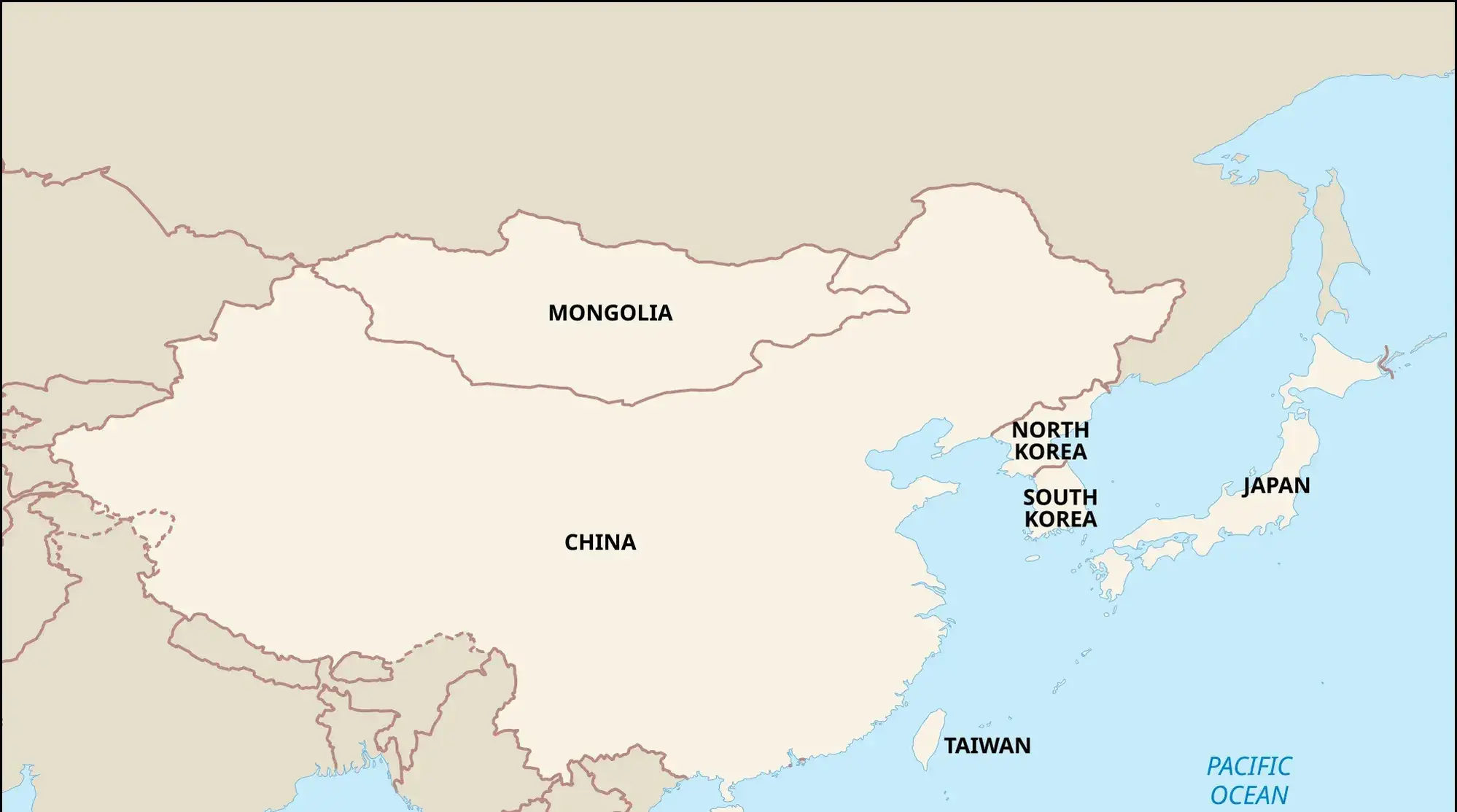
EAST ASIA
East Asia, a region encompassing countries like China, Japan, South Korea, North Korea, Mongolia, and Taiwan, is characterized by a rich tapestry of cultural, historical, and geographical uniqueness.
This diversity is rooted in thousands of years of history, with ancient civilizations contributing to the region's distinct identities.
China, the largest country in the region, boasts a profound historical legacy, with its dynasties, philosophies like Confucianism and Taoism, and innovations such as papermaking and gunpowder.
The Great Wall and the Forbidden City are iconic symbols of its imperial past.
China's rapid modernization since the late 20th century has positioned it as a global economic powerhouse while still holding onto traditional practices like calligraphy, tea ceremonies, and martial arts.
Japan, an island nation, melds traditional and modern influences.
Its culture is a blend of Shinto and Buddhist practices, evident in its festivals, architecture, and art.
Japan’s advancements in technology and pop culture, including anime and J-pop, have made it a significant player on the global stage.
The aesthetic principles of wabi-sabi celebrate imperfection and transience, deeply influencing Japanese art and design.
South Korea stands out for its vibrant culture, which has gained international recognition through the Korean Wave (Hallyu), encompassing K-pop, film, and cuisine.
The country’s history, marked by resilience through invasions and colonization, fosters a strong national identity.
Innovations in technology and fashion also highlight its dynamic nature.
Mongolia, known for its nomadic traditions and vast steppes, offers a contrast with its pastoral lifestyle and rich folklore.
The region’s shared Confucian and Buddhist philosophies, alongside distinct languages and dialects, contribute to its cultural complexity.
Overall, East Asia’s uniqueness lies in its harmonious blend of ancient traditions and contemporary innovations, making it a fascinating region of the world.


