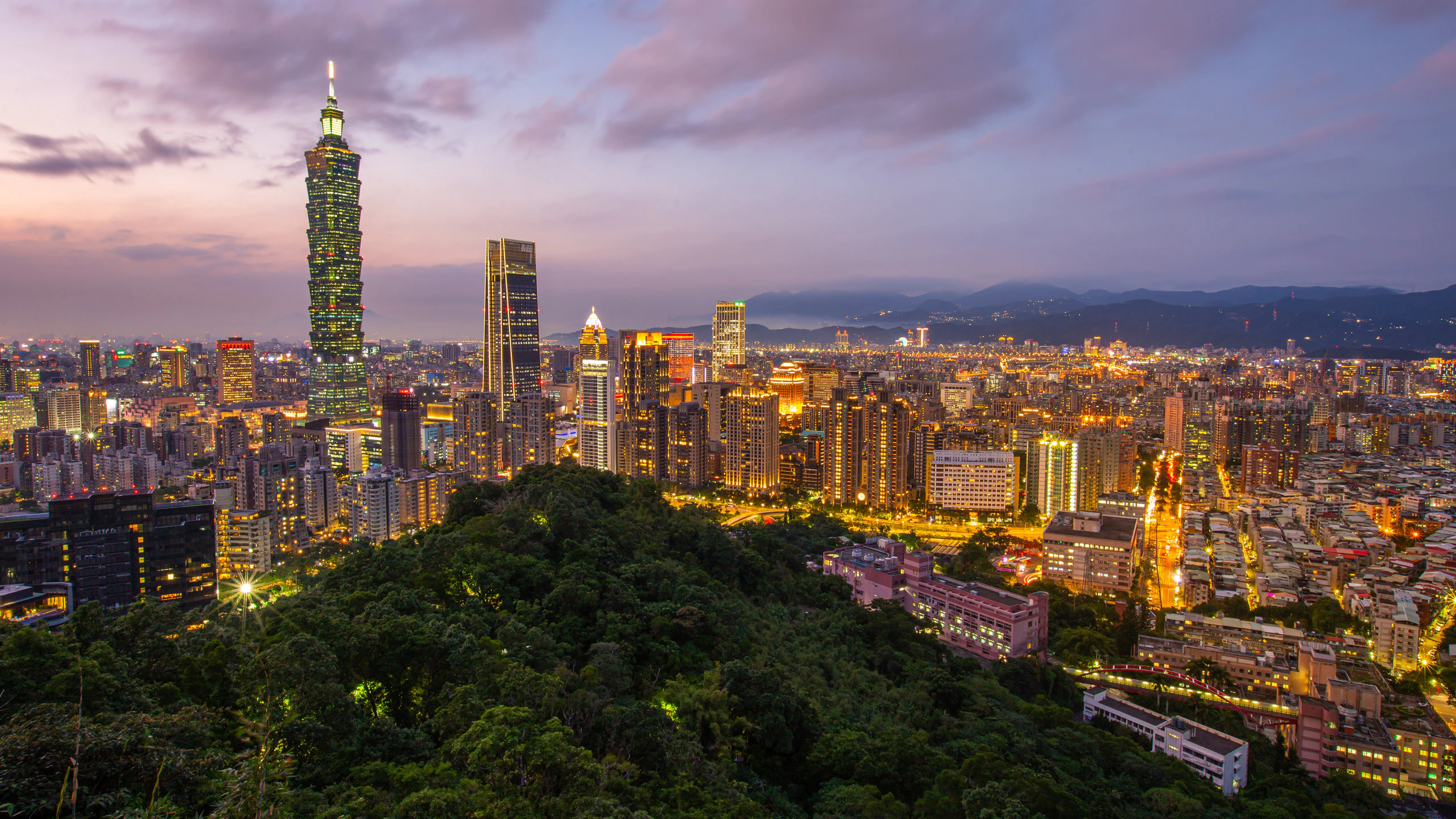
Demonym: Taiwanese
Capital City: Taipei
Coordiantes: 25°04′N 121°31′E
Population: 24 million
HDI (Human Development Index): 0.926
GDP (Nominal): $751.930bil
Taiwan, officially known as the Republic of China (ROC), is an island located in East Asia, situated approximately 180 kilometers off the southeastern coast of mainland China.
With an area of about 36,000 square kilometers, Taiwan is characterized by its diverse landscapes, vibrant culture, and complex political status.
The island is home to around 23 million people, with its capital and largest city being Taipei.
Geography and Climate
Taiwan's geography is marked by rugged mountains, lush valleys, and scenic coastlines.
The Central Mountain Range runs north to south through the island, with peaks reaching over 3,000 meters, including Yushan, the highest mountain in East Asia.
The eastern coastline features dramatic cliffs and beaches, while the western side is more developed, with major cities and agricultural plains.
Taiwan experiences a subtropical climate, with four distinct seasons.
Summers are hot and humid, while winters can be cool, particularly in the north.
The island is prone to typhoons during the summer months, which can bring heavy rains and strong winds.
This climate contributes to Taiwan's rich biodiversity, with many endemic species of flora and fauna.
Cultural Heritage
Taiwan boasts a rich cultural tapestry that reflects its diverse history.
The island has been influenced by indigenous peoples, Chinese settlers, Japanese colonization, and modern globalization.
The majority of the population is of Han Chinese descent, with significant indigenous communities preserving their unique languages and traditions.
Taiwan is known for its vibrant festivals and traditions, including the Lunar New Year, the Dragon Boat Festival, and the Mid-Autumn Festival.
The island's culinary scene is particularly famous, with night markets offering a variety of street foods, such as stinky tofu, bubble tea, and beef noodles.
The influence of Japanese cuisine is also notable due to the colonial period.
Political Structures
Taiwan’s political status is a complex and sensitive issue.
The ROC was established in 1912 after the fall of the Qing Dynasty, and it retreated to Taiwan following the Chinese Civil War in 1949.
Since then, Taiwan has maintained a separate government, democratic political system, and a vibrant civil society, but it is claimed by the People’s Republic of China (PRC) as part of its territory.
This situation has led to ongoing tensions and challenges in international relations, as many countries navigate their recognition of Taiwan.
Economy
Taiwan has a highly developed and export-oriented economy, known for its technology and manufacturing sectors.
The island is a global leader in the production of semiconductors, electronics, and information technology products.
Major companies such as Taiwan Semiconductor Manufacturing Company (TSMC) play a crucial role in the global supply chain.
The economy is also supported by agriculture, with rice, fruits, and vegetables being significant products.
Tourism has grown in recent years, with visitors drawn to Taiwan's natural beauty, cultural landmarks, and vibrant cities.
Natural Beauty and Biodiversity
Taiwan is renowned for its stunning natural landscapes, from the Taroko Gorge to the picturesque Sun Moon Lake.
National parks, such as Yangmingshan and Kenting, showcase diverse ecosystems and offer opportunities for hiking, birdwatching, and enjoying the outdoors.
The island's commitment to environmental conservation has led to numerous protected areas that preserve its unique biodiversity.
Conclusions
Taiwan is a nation that uniquely blends rich cultural heritage, economic dynamism, and breathtaking natural beauty.
Its complex political status and vibrant society contribute to its distinct identity on the global stage.
As Taiwan continues to evolve, it remains a focal point of interest and admiration, drawing visitors and attention from around the world.