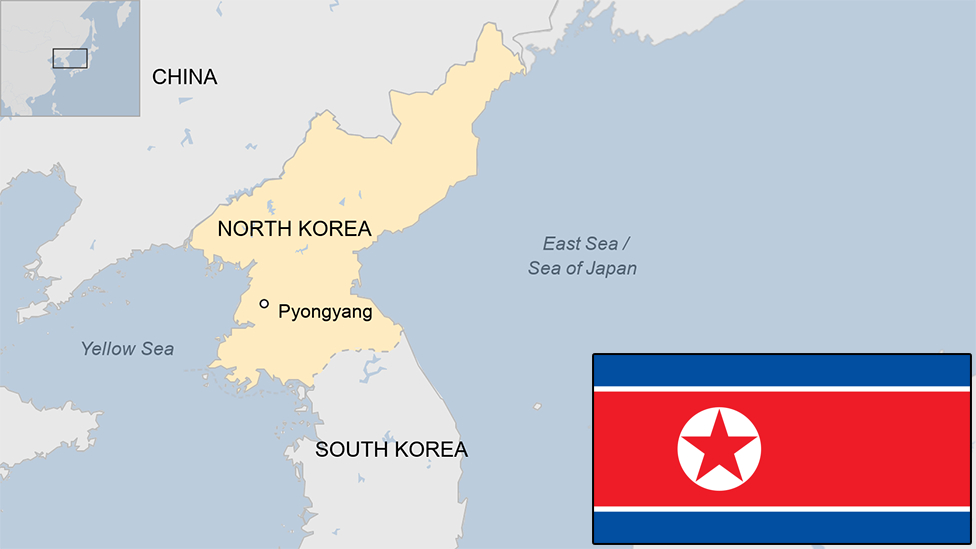
Demonym: North Korean
Capital City: Pyongyang
Coordiantes: 39°2′N 125°45′E
Population: 26.2 million
GDP (Nominal): $16bil
North Korea, officially known as the Democratic People’s Republic of Korea (DPRK), is a secretive and isolated nation located on the northern part of the Korean Peninsula in East Asia.
Bordered by China to the north, Russia to the northeast, and South Korea to the south, North Korea covers an area of approximately 120,540 square kilometers and is home to around 25 million people.
The capital city, Pyongyang, serves as the political, economic, and cultural center of the country.
Geography and Climate
North Korea's landscape is predominantly mountainous, with about 80% of its territory consisting of mountains and hills.
The most significant range is the Taebaek Mountains, which run down the eastern side of the country.
Notable geographical features include the Amnok (Yalu) River, which forms the border with China, and the Tumen River, which separates North Korea from Russia.
The western coast features a series of plains and valleys, making it suitable for agriculture.
The climate varies by region, with a temperate continental climate in most areas.
Winters can be harsh, especially in the northern regions, while summers are warm and humid.
The country experiences four distinct seasons, with most rainfall occurring during the summer months, contributing to the agricultural cycles.
Political Structure and Governance
North Korea is a single-party state governed by the Workers' Party of Korea, with a political system characterized by strict control over all aspects of life.
Kim Il-sung, the country's founding leader, established a cult of personality that continues to influence the nation today.
His grandson, Kim Jong-un, currently leads the country, maintaining the regime’s authoritarian structure.
The government exerts tight control over the economy, media, and public life.
The state promotes a policy known as Juche, or self-reliance, which emphasizes independence from foreign powers and reliance on domestic resources.
This has resulted in a largely centralized economy that has faced significant challenges, including food shortages and economic isolation.
Cultural Heritage
North Korea's culture is heavily influenced by its political ideology, with art, literature, and music often used as tools for propaganda.
Traditional Korean culture, including music, dance, and festivals, is celebrated, but it is largely framed within the context of national pride and loyalty to the ruling regime.
The government promotes a distinct version of Korean history, focusing on the achievements of the Kim dynasty and the struggles against imperialism.
Major celebrations, such as the Day of the Sun (Kim Il-sung's birthday) and the Day of the Foundation of the Republic, showcase grand parades and performances that highlight the country’s military strength and cultural heritage.
Economy
North Korea’s economy is largely state-controlled, with significant focus on heavy industry, agriculture, and military production.
The country faces chronic economic challenges, including international sanctions, natural disasters, and inefficient agricultural practices.
Food shortages are common, and the government often relies on foreign aid to support its population.
Natural Beauty and Biodiversity
Despite its political isolation, North Korea is home to stunning natural beauty.
The country features numerous national parks, such as Mount Kumgang and Mount Paektu, which hold cultural significance and offer breathtaking landscapes.
The Taedong River, which flows through Pyongyang, adds to the country’s scenic charm.
Conclusions
North Korea remains one of the most enigmatic countries in the world, characterized by its strict governance, rich cultural heritage, and beautiful landscapes.
While the regime continues to face international scrutiny and internal challenges, the resilience of its people and the unique cultural identity of the nation contribute to its complex narrative.
As North Korea navigates its future, it remains a focal point of global interest and geopolitical concern.