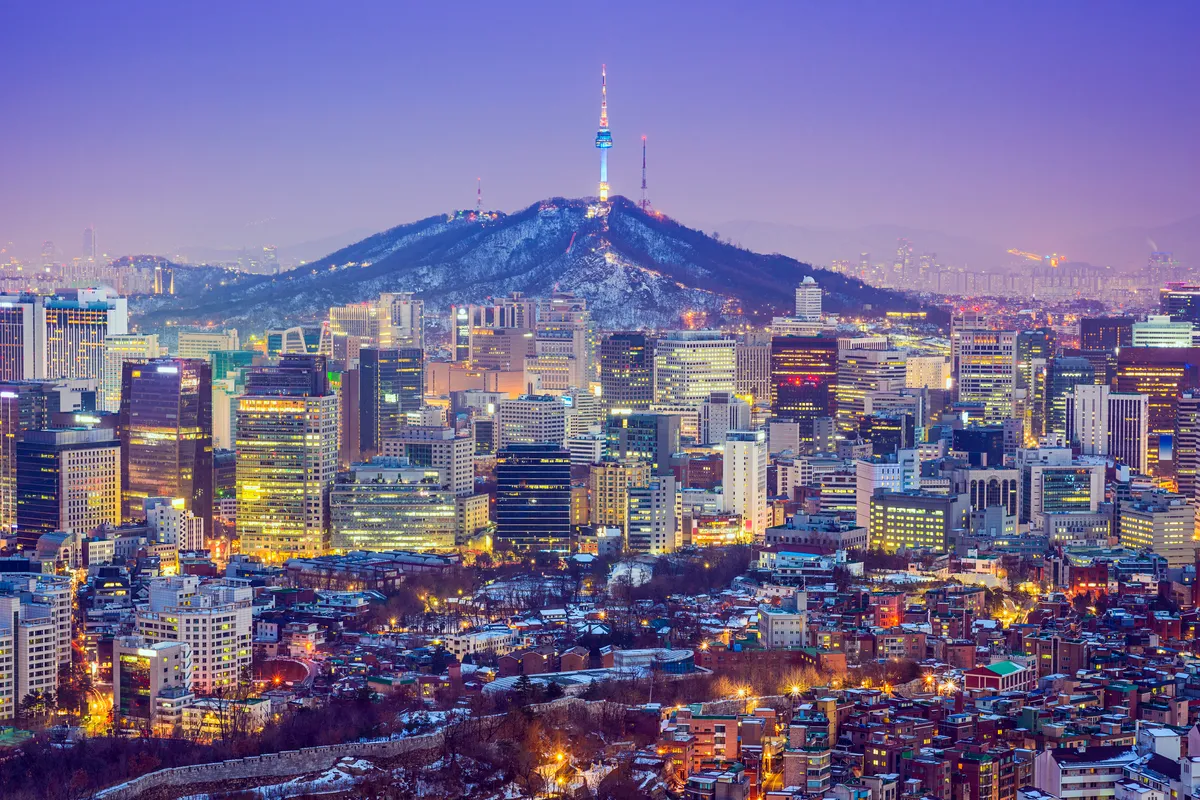
Demonym: Korean
Capital City: Seoul
Coordiantes: 37°33′N 126°58′E
Population: 52.1 million
HDI (Human Development Index): 0.929
GDP (Nominal): $1.869tril
South Korea, officially known as the Republic of Korea (ROK), is a vibrant East Asian nation located on the southern half of the Korean Peninsula.
With a land area of approximately 100,210 square kilometers, it is bordered by North Korea to the north, the Yellow Sea to the west, the Sea of Japan to the east, and the Korea Strait to the south.
Home to around 52 million people, South Korea is known for its rich cultural heritage, rapid modernization, and significant global influence.
Geography and Climate
South Korea’s landscape is characterized by mountainous terrains, valleys, and coastal plains.
The country is approximately 70% mountainous, with the Taebaek Mountains running down the eastern coast. Hallasan, located on Jeju Island, is the highest peak at 1,947 meters.
South Korea’s numerous rivers, including the Han and Nakdong, play a crucial role in agriculture and urban life.
The climate varies from temperate in the north to subtropical in the south.
It experiences four distinct seasons, with cold winters and hot, humid summers.
Spring is marked by the beautiful cherry blossoms, while autumn brings vibrant foliage, making these seasons particularly popular for tourism.
Cultural Heritage
South Korea has a rich cultural history that blends ancient traditions with modern influences.
The country has been shaped by Confucianism, Buddhism, and shamanistic beliefs, which are evident in its customs, festivals, and daily life.
Major cultural sites, such as Gyeongbokgung Palace in Seoul and the historic city of Gyeongju, reflect the nation’s historical significance.
The Korean language, known as Hangul, is an integral part of its identity.
Korean cuisine, recognized for its bold flavors and health benefits, includes iconic dishes like kimchi, bulgogi, and bibimbap.
The cultural phenomenon known as “Hallyu” or the Korean Wave has popularized K-pop music, Korean dramas, and films globally, showcasing South Korea’s contemporary cultural impact.
Economy
South Korea has one of the world’s largest and most advanced economies, often referred to as the "Miracle on the Han River" due to its rapid industrialization post-Korean War.
The country is known for its technology and manufacturing prowess, with leading companies like Samsung, Hyundai, and LG at the forefront of innovation.
South Korea is a global leader in electronics, automotive production, and shipbuilding.
The service sector, particularly in finance and tourism, has also seen significant growth.
South Korea attracts millions of tourists each year, drawn by its historical sites, vibrant cities, and culinary experiences.
The government actively promotes tourism and has invested in infrastructure to enhance visitor experiences.
Natural Beauty and Biodiversity
South Korea is rich in natural beauty, with numerous national parks, scenic coastlines, and islands.
The Seoraksan National Park, known for its stunning mountain landscapes and hiking trails, is a popular destination.
Jeju Island, famous for its volcanic landscapes and unique flora, is another highlight, attracting both domestic and international tourists.
The country is committed to preserving its environment and biodiversity, with initiatives aimed at protecting its forests, marine ecosystems, and endangered species.
Conclusion
South Korea is a nation that seamlessly blends tradition and modernity.
Its rich cultural heritage, dynamic economy, and stunning landscapes make it a captivating destination for travelers and an influential player on the global stage.
As South Korea continues to evolve and innovate, it remains a vibrant country that celebrates its past while embracing the future, attracting interest and admiration from around the world.