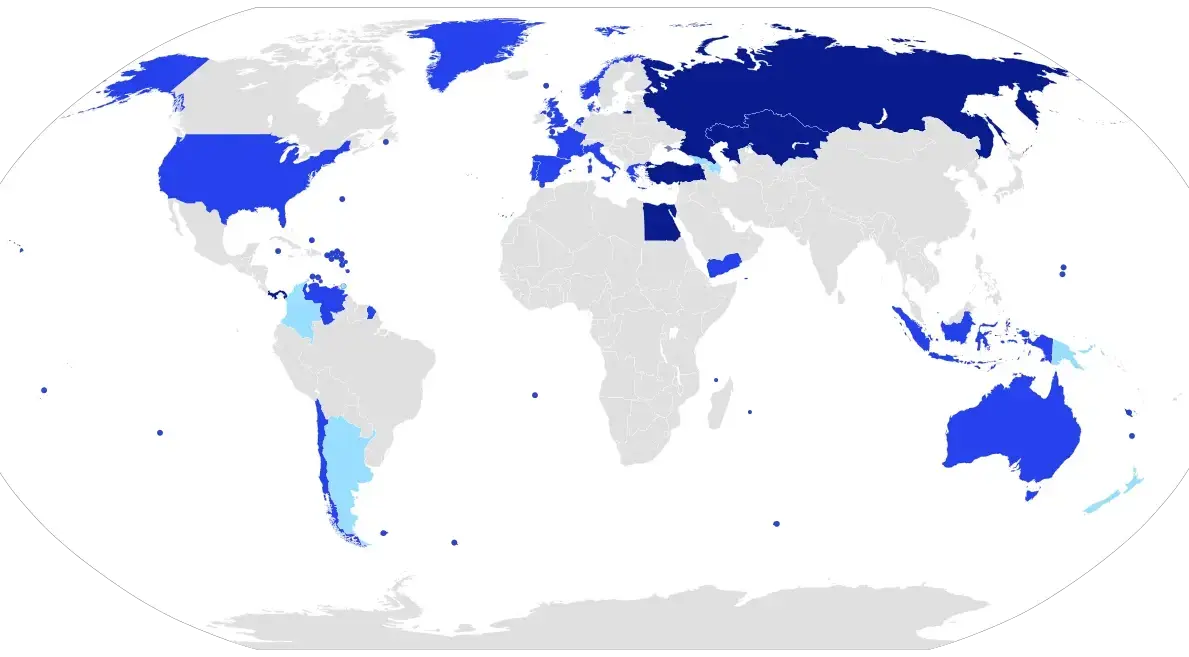
TRANSCONTINENTAL COUNTRIES
Transcontinental countries straddling Asia and Europe—primarily Turkey, Russia, and Kazakhstan—offer a fascinating blend of cultures, histories, and geographies, embodying the unique intersections of these two continents.
Turkey, situated at the crossroads of East and West, is characterized by its rich historical heritage that dates back to ancient civilizations, including the Hittites and Byzantines.
Istanbul, straddling both continents across the Bosporus Strait, showcases this duality through its stunning architecture, from the Hagia Sophia to the Blue Mosque.
Turkish culture reflects a vibrant fusion of influences, combining traditional customs with modern developments.
The culinary landscape, with dishes like kebabs and baklava, exemplifies this blend, while festivals such as Eid and local music traditions highlight its diverse cultural tapestry.
Russia, the largest country in the world, spans Eastern Europe and northern Asia, presenting vast and varied landscapes from the Ural Mountains to Siberian tundra.
Its rich cultural heritage includes contributions to literature, ballet, and classical music, with iconic figures like Tolstoy and Tchaikovsky.
The historic cities of Moscow and St. Petersburg reflect a complex history, combining imperial grandeur with revolutionary pasts.
The Russian Orthodox Church and diverse ethnic groups contribute to a unique cultural mosaic, fostering traditions that are both distinct and intertwined.
Kazakhstan, the world’s largest landlocked country, showcases a blend of nomadic heritage and modernity.
Its vast steppes have historically supported a nomadic lifestyle, reflected in the traditional yurt and horsemanship.
The capital, Nur-Sultan (formerly Astana), symbolizes its rapid modernization, featuring futuristic architecture alongside traditional elements.
Kazakhstan’s diverse population, including Kazakhs, Russians, and others, enhances its cultural richness, celebrated through music, art, and festivals like Nauryz, which marks the spring equinox.
Together, these transcontinental countries illustrate the unique interplay of cultural, historical, and geographical elements that define the rich diversity of both Asia and Europe.


