Demonym: Saudi
Capital City: Riyadh
Coordiantes: 24°39′N 46°46′E
Population: 32.18 million
HDI (Human Development Index): 0.875
GDP (Nominal): $1.1tril
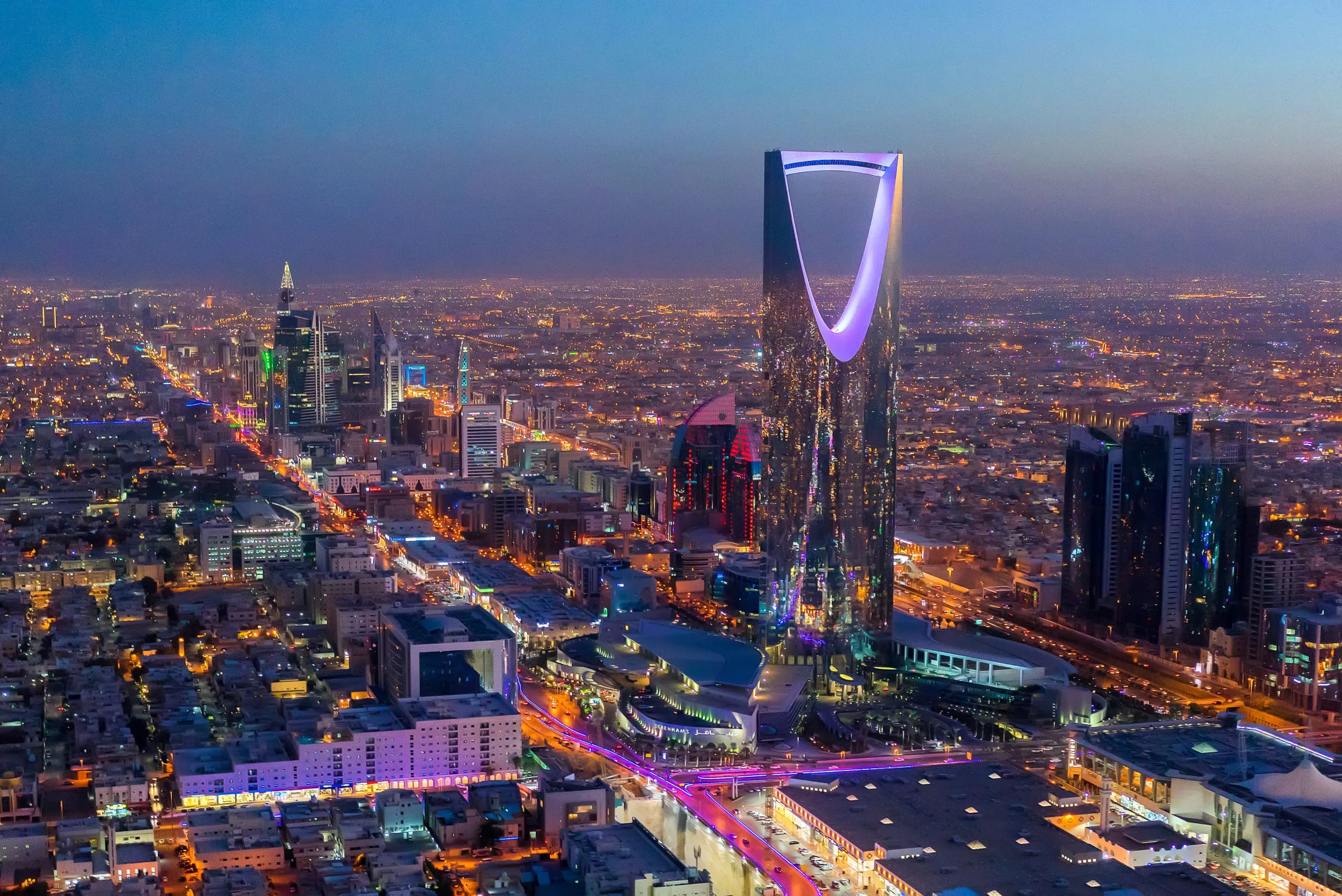
Saudi Arabia, located in the heart of the Arabian Peninsula, is a country of immense historical significance and economic power. Known as the birthplace of Islam, it is home to the two holiest cities in the Muslim world: Mecca and Medina. With vast deserts, rich cultural traditions, and a rapidly modernizing economy, Saudi Arabia plays a crucial role in regional and global affairs. This description delves into the country’s geography and climate, cultural heritage, nature and biodiversity, economy, and concludes with a perspective on its future.
Geography and Climate
Saudi Arabia is the largest country in the Middle East, covering approximately 2.15 million square kilometers (830,000 square miles). Its geography is predominantly desert, with the Rub' al Khali, or Empty Quarter, being the largest continuous sand desert in the world. The country also features mountainous regions in the west, including the Asir and Hijaz mountains, and a rugged coastline along the Red Sea and the Arabian Gulf.
The climate is characterized by extreme aridity, with hot summers where temperatures can exceed 50°C (122°F) and mild winters. Rainfall is minimal, averaging less than 100 millimeters (4 inches) annually, mostly concentrated in the winter months. This harsh climate shapes the lifestyle and agricultural practices of the region, making water management a critical concern.
Cultural Heritage
Saudi Arabia has a rich cultural heritage rooted in its Islamic traditions and Bedouin history. The Kingdom is home to numerous historical sites, including the ancient Nabatean city of Al-Ula and the archaeological sites of Diriyah, the original home of the Saudi royal family.
Islamic culture permeates daily life, with the five daily prayers and the observance of religious festivals such as Eid al-Fitr and Eid al-Adha. Traditional arts, including calligraphy, pottery, and music, reflect the country’s heritage. The annual Janadriyah Festival celebrates Saudi culture and heritage through art, crafts, and traditional performances, promoting national pride and unity.
Nature and Biodiversity
Despite its desert landscape, Saudi Arabia is home to a surprising variety of ecosystems and wildlife. The country’s diverse habitats include coastal areas, mountains, and oases, supporting a range of flora and fauna. The Arabian Oryx, once near extinction, has been successfully reintroduced through conservation efforts.
The Red Sea is renowned for its coral reefs and marine biodiversity, attracting divers and researchers. Important protected areas, such as the Farasan Islands and Al-Ula, are crucial for preserving unique ecosystems and wildlife. However, environmental challenges, including desertification and habitat loss, pose threats to biodiversity, prompting ongoing conservation initiatives.
Economy
Saudi Arabia has one of the largest economies in the Middle East, heavily reliant on oil production, which accounts for a significant portion of its GDP and export revenue. The Kingdom is one of the world's leading oil producers and a founding member of the Organization of the Petroleum Exporting Countries (OPEC).
In recent years, Saudi Arabia has embarked on an ambitious plan to diversify its economy through Vision 2030, aiming to reduce dependency on oil by promoting sectors such as tourism, entertainment, and technology. Major projects, like NEOM, a planned city for innovation and sustainability, reflect the country’s commitment to modernization and economic diversification.
Conclusion
Saudi Arabia is a nation of contrasts, where ancient traditions coexist with modern advancements. Its vast deserts, rich cultural heritage, and economic significance make it a key player in both the Arab world and on the global stage. As the Kingdom navigates the complexities of economic diversification and social change, it remains focused on preserving its cultural identity while embracing innovation. With its deep historical roots and a forward-looking vision, Saudi Arabia is poised to continue its influential role in shaping the future of the region and beyond.