Demonym: Omani
Capital City: Muscat
Coordiantes: 23°35′20″N 58°24′30″E
Population: 5 million
HDI (Human Development Index): 0.819
GDP (Nominal): $108.282bil
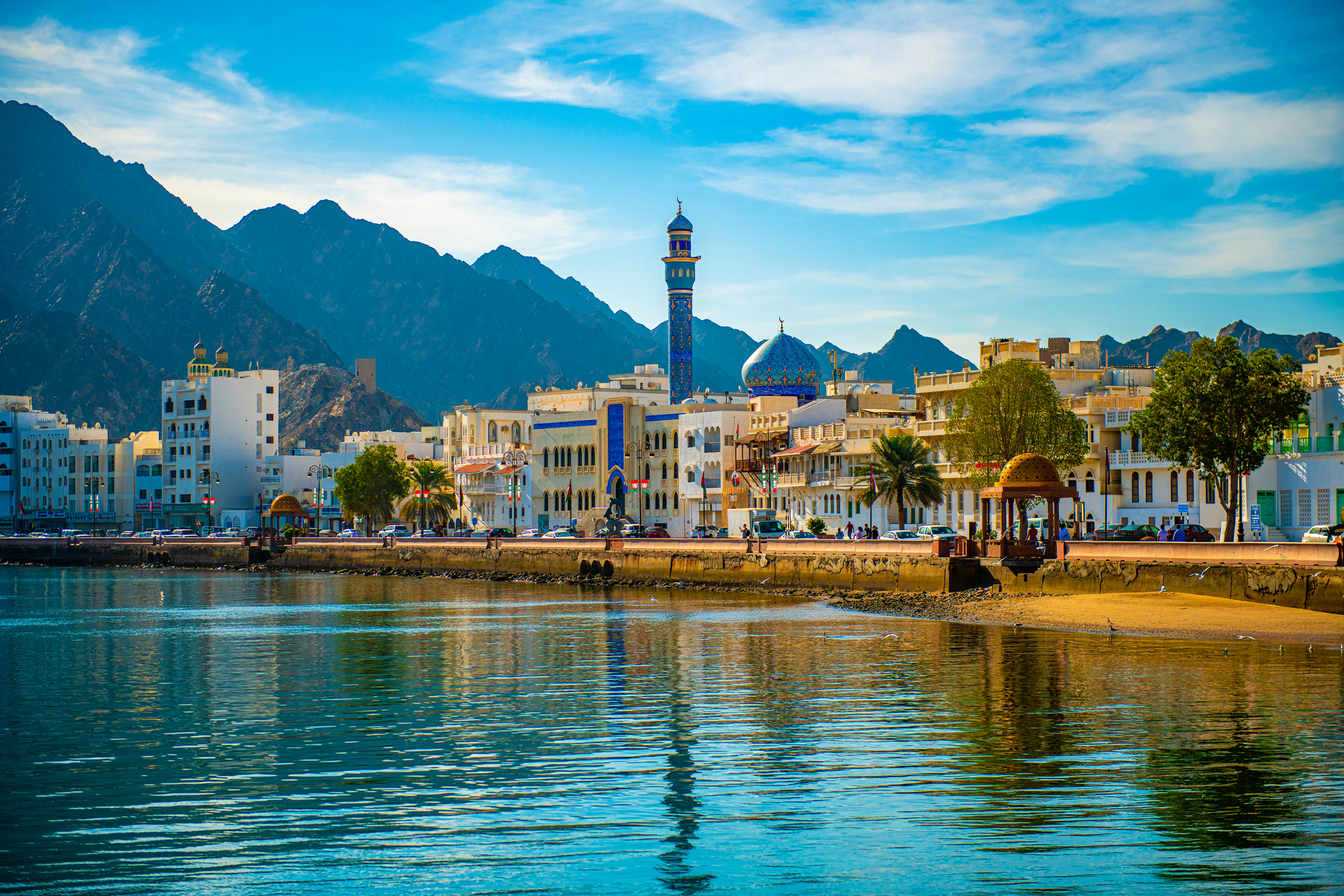
Oman, located on the southeastern coast of the Arabian Peninsula, is a country rich in history, culture, and natural beauty. With its strategic position along the Arabian Sea and the Gulf of Oman, Oman has been a vital crossroads for trade and cultural exchange for centuries. Known for its stunning landscapes, from rugged mountains and vast deserts to pristine coastlines, Oman offers a unique blend of traditional heritage and modern development. This description delves into Oman’s geography, climate, cultural heritage, nature, biodiversity, and economy.
Geography and Climate
Oman’s geography is marked by a diverse array of landscapes. The country features the Hajar Mountains, which run through the northern region, including Jebel Shams, the highest peak at approximately 3,000 meters (9,843 feet). The vast Rub' al Khali, or Empty Quarter, dominates the southern part of Oman, consisting of one of the largest sand deserts in the world.
Oman's climate is characterized by arid conditions, with hot summers and mild winters. Coastal areas experience a humid climate, while inland regions can be extremely hot, with temperatures exceeding 50°C (122°F) in the summer. The winter months, from November to March, bring cooler temperatures and some rainfall, primarily in the northern mountains, which is essential for agriculture.
Cultural Heritage
Oman has a rich cultural heritage shaped by its long history as a center for trade and maritime activities. The country is known for its historic forts, castles, and traditional souks, which reflect its architectural legacy. Key sites include the ancient city of Nizwa, known for its impressive fort, and the UNESCO World Heritage Site of Bahla, which features an ancient fortress.
The Omani people take great pride in their traditions, which are deeply rooted in Islamic culture. Festivals such as Eid al-Fitr and Eid al-Adha are widely celebrated, showcasing traditional music, dance, and cuisine. Omani hospitality is renowned, with guests often welcomed with coffee and dates. The country also has a rich oral tradition, including poetry and storytelling, which highlights its cultural identity.
Nature and Biodiversity
Oman boasts a remarkable diversity of ecosystems, ranging from mountainous terrains to coastal areas and desert landscapes. The country's varied geography supports a wide array of flora and fauna, with numerous endemic species. The Arabian Oryx, once endangered, has seen successful reintroduction efforts in Oman, showcasing the country’s commitment to conservation.
Coastal regions, particularly around the Musandam Peninsula, are rich in marine biodiversity, home to coral reefs and various fish species. Oman’s efforts to protect its natural environment include the establishment of protected areas, such as the Ras al Jinz Turtle Reserve, which plays a crucial role in conserving nesting sites for endangered green turtles.
Economy
Oman's economy has historically relied on agriculture and trade, but oil has become the cornerstone of its economic development since the discovery of petroleum in the 20th century. Oil exports significantly contribute to national revenue, although the government is actively working to diversify the economy through initiatives such as Vision 2040, which aims to reduce dependency on oil and promote sectors like tourism, manufacturing, and logistics.
Agriculture, while less dominant today, remains important, especially in the production of dates, fruits, and vegetables. The tourism sector is also growing, with Oman’s natural beauty and cultural heritage attracting visitors from around the world.
Conclusion
Oman is a country of extraordinary natural beauty and rich cultural heritage. Its diverse geography and climate provide a unique backdrop for a society that values tradition while embracing modernity. Despite economic challenges, Oman’s commitment to preserving its cultural identity and natural resources positions it as a leader in sustainable development in the region. With its welcoming people and stunning landscapes, Oman continues to be a gem of the Arabian Peninsula, reflecting a harmonious blend of past and present.