Demonym: Singaporean
Capital City: Singapore
Coordiantes: 1°17′N 103°50′E
Population: 6 million
HDI (Human Development Index): 0.949
GDP (Nominal): $525.228bil
Singapore, officially known as the Republic of Singapore, is a small but highly developed city-state located at the southern tip of the Malay Peninsula in Southeast Asia.
Covering an area of just 728.6 square kilometers, Singapore is one of the world's most densely populated countries, with a population of around 5.7 million people.
Renowned for its modern skyline, multicultural society, and vibrant economy, Singapore is a global hub for finance, trade, and tourism.
Geography and Climate
Singapore is an island nation made up of one main island and 63 smaller islands, some of which are uninhabited.
The country’s geography is characterized by a flat landscape, with the highest natural point being Bukit Timah Hill at just 163 meters.
Its strategic location along the Singapore Strait makes it a crucial maritime hub, facilitating international shipping and trade.
The climate is tropical, featuring high humidity and temperatures ranging from 24°C to 31°C throughout the year.
Singapore experiences two monsoon seasons: the Northeast Monsoon from December to March and the Southwest Monsoon from June to September.
The country’s lush greenery, including parks, gardens, and nature reserves, contributes to its reputation as a “Garden City.”
Cultural Diversity
Singapore is a melting pot of cultures, with a diverse population comprising ethnic Chinese, Malays, Indians, and various other groups.
This multiculturalism is reflected in the country’s languages, religions, and festivals.
English, Malay, Mandarin, and Tamil are the official languages, with English serving as the main medium of communication.
The cultural landscape is vibrant, with festivals like Chinese New Year, Hari Raya Puasa, Deepavali, and Christmas celebrated with great enthusiasm.
Singapore’s neighborhoods, such as Chinatown, Little India, and Kampong Glam, showcase distinct cultural identities, each offering a unique blend of food, architecture, and traditions.
Economy
Singapore boasts one of the most prosperous and stable economies in the world.
It is known for its highly developed financial sector, manufacturing capabilities, and strategic port, which is one of the busiest in the world.
The economy is characterized by low unemployment rates and a high standard of living.
The government has actively promoted Singapore as a global business hub, attracting multinational corporations and fostering innovation in technology and research.
Key industries include finance, electronics, biomedical sciences, and tourism.
The city-state has also positioned itself as a leading center for logistics and trade, supported by its advanced infrastructure and connectivity.
Tourism and Attractions
Tourism is a vital component of Singapore’s economy, attracting millions of visitors each year.
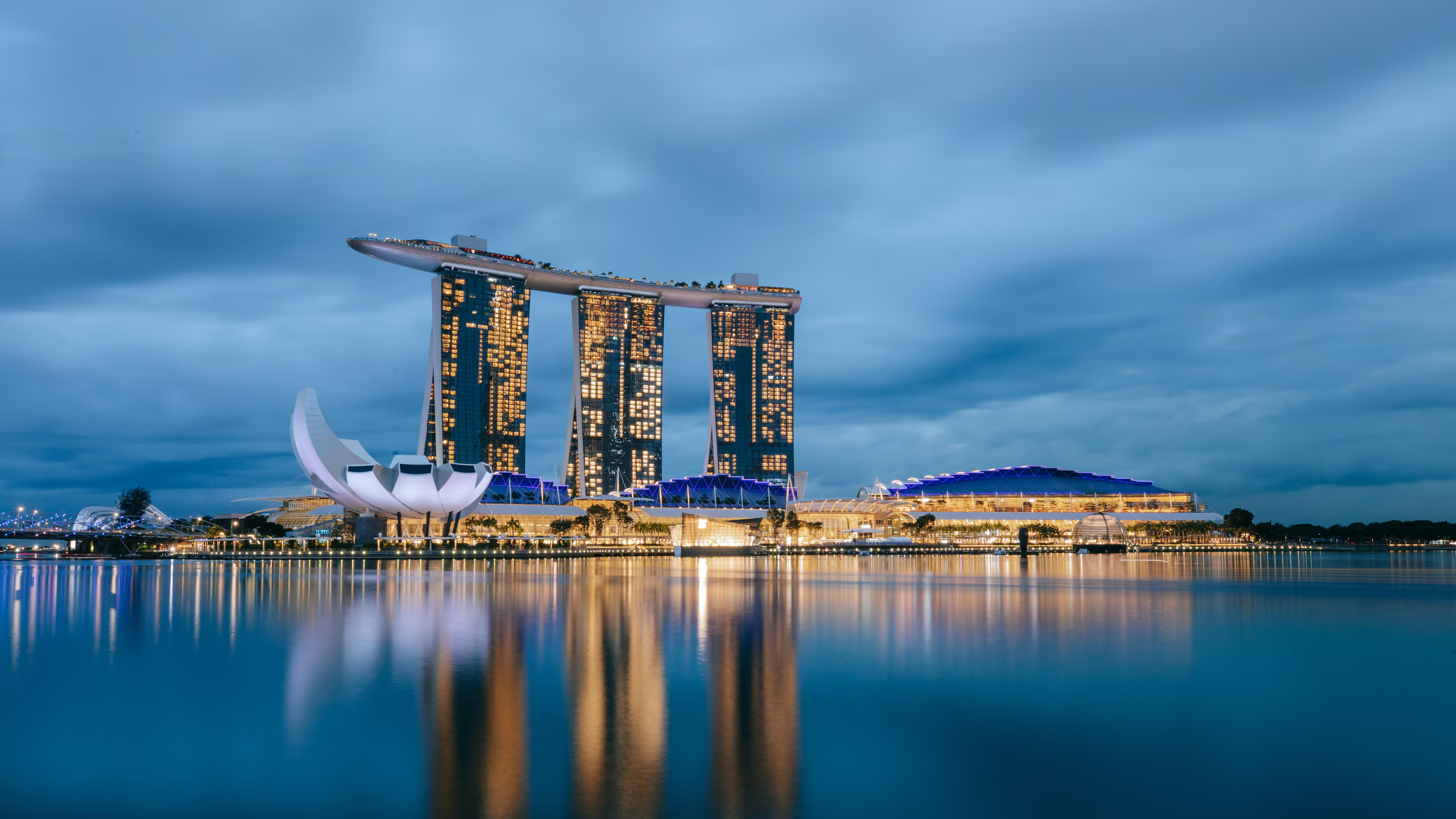
The city offers a plethora of attractions, ranging from the iconic Marina Bay Sands and Gardens by the Bay to the historic Merlion statue.
Orchard Road is famous for shopping, while Sentosa Island features world-class resorts, theme parks, and beaches.
Cultural attractions include the Singapore Botanic Gardens, a UNESCO World Heritage Site, and the National Gallery Singapore, which houses a vast collection of Southeast Asian art.
Food plays a significant role in Singaporean culture, with hawker centers offering a wide variety of local dishes, such as Hainanese chicken rice, chili crab, and laksa.
Conclusions
Singapore is a remarkable example of a modern city-state that balances rapid development with cultural diversity and environmental sustainability.
Its commitment to innovation, safety, and quality of life has made it a desirable place to live, work, and visit.
As Singapore continues to evolve, it remains a dynamic hub of culture, commerce, and connectivity, offering a unique blend of experiences that captivate residents and tourists alike.