Demonym: Lao
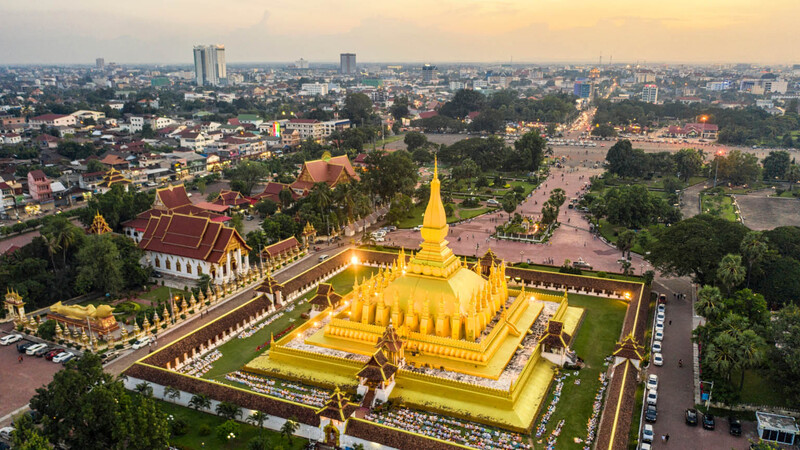
Capital City: Vientiane
Coordiantes: 17°58′N 102°36′E
Population: 7.8 million
HDI (Human Development Index): 0.62
GDP (Nominal): $14.244bil
Laos, officially known as the Lao People's Democratic Republic, is a landlocked country in Southeast Asia, bordered by China to the north, Vietnam to the east, Cambodia to the southeast, Thailand to the west, and Myanmar to the northwest.
With an area of about 236,800 square kilometers, Laos is known for its mountainous terrain, lush landscapes, and rich cultural heritage.
Geography and Climate
The geography of Laos is characterized by its rugged mountains, dense forests, and extensive river systems, including the mighty Mekong River, which forms a significant part of its western border.
The country’s highest peak is Phou Bia, standing at 2,817 meters, located in the Annamite Range.
The climate is tropical, with a rainy season from May to October and a dry season from November to April, making the latter the most popular time for tourism.
Cultural Diversity
Laos is home to a rich tapestry of cultures and ethnic groups, with over 160 different ethnicities recognized.
The Lao ethnic group constitutes the majority, but various hill tribes, such as the Hmong and Khmu, contribute to the country’s cultural diversity.
The official language is Lao, which is closely related to Thai, but many ethnic groups speak their own languages and dialects.
The predominant religion in Laos is Theravada Buddhism, which profoundly influences the culture and daily life.
Temples, or "wats," are central to Lao society, serving as places of worship, community gatherings, and cultural activities.
Traditional festivals, such as Pi Mai (Lao New Year) and Boun That Luang, are celebrated with great enthusiasm, showcasing colorful parades, traditional music, and vibrant dances.
Historical Background
Laos has a complex history influenced by its location along ancient trade routes.
It was once part of the Lan Xang Kingdom, which thrived from the 14th to the 18th century.
French colonial rule from the late 19th century to the mid-20th century left a lasting impact on the country’s architecture, education system, and cuisine.
Following a turbulent period during the Vietnam War, Laos became a communist state in 1975.
Today, the government focuses on economic development while maintaining a one-party system.
Economy
Laos is classified as a developing country with a growing economy largely driven by agriculture, hydropower, and mining.
The fertile plains of the Mekong River basin support rice cultivation, which is a staple food and a significant part of the economy.
In recent years, the government has sought to enhance tourism, promoting the country’s natural beauty, historical sites, and unique culture.
Popular tourist destinations include Luang Prabang, a UNESCO World Heritage Site known for its well-preserved architecture and spiritual significance, and Vang Vieng, famous for its stunning karst landscapes and adventure tourism.
Natural Beauty and Biodiversity
Laos is renowned for its stunning natural landscapes, from the limestone karsts of Vang Vieng to the lush rainforests of the Bolaven Plateau.
The country boasts a rich biodiversity, with numerous national parks and protected areas that serve as habitats for various wildlife, including elephants, tigers, and many bird species.
Ecotourism is gaining popularity, with initiatives aimed at preserving natural resources while providing sustainable economic opportunities for local communities.
Conclusion
Laos is a country of serene beauty, deep cultural roots, and resilient spirit.
As it navigates the path of modernization while honoring its traditions, Laos offers a unique experience for travelers and an insight into the heart of Southeast Asia.
The harmonious blend of its landscapes, cultures, and history makes Laos a captivating destination worth exploring.