Demonym: Maldivian
Capital City: Malé
Coordiantes: 4°10′31″N 73°30′32″E
Population: 515,000
HDI (Human Development Index): 0.762
GDP (Nominal): $11.977bil
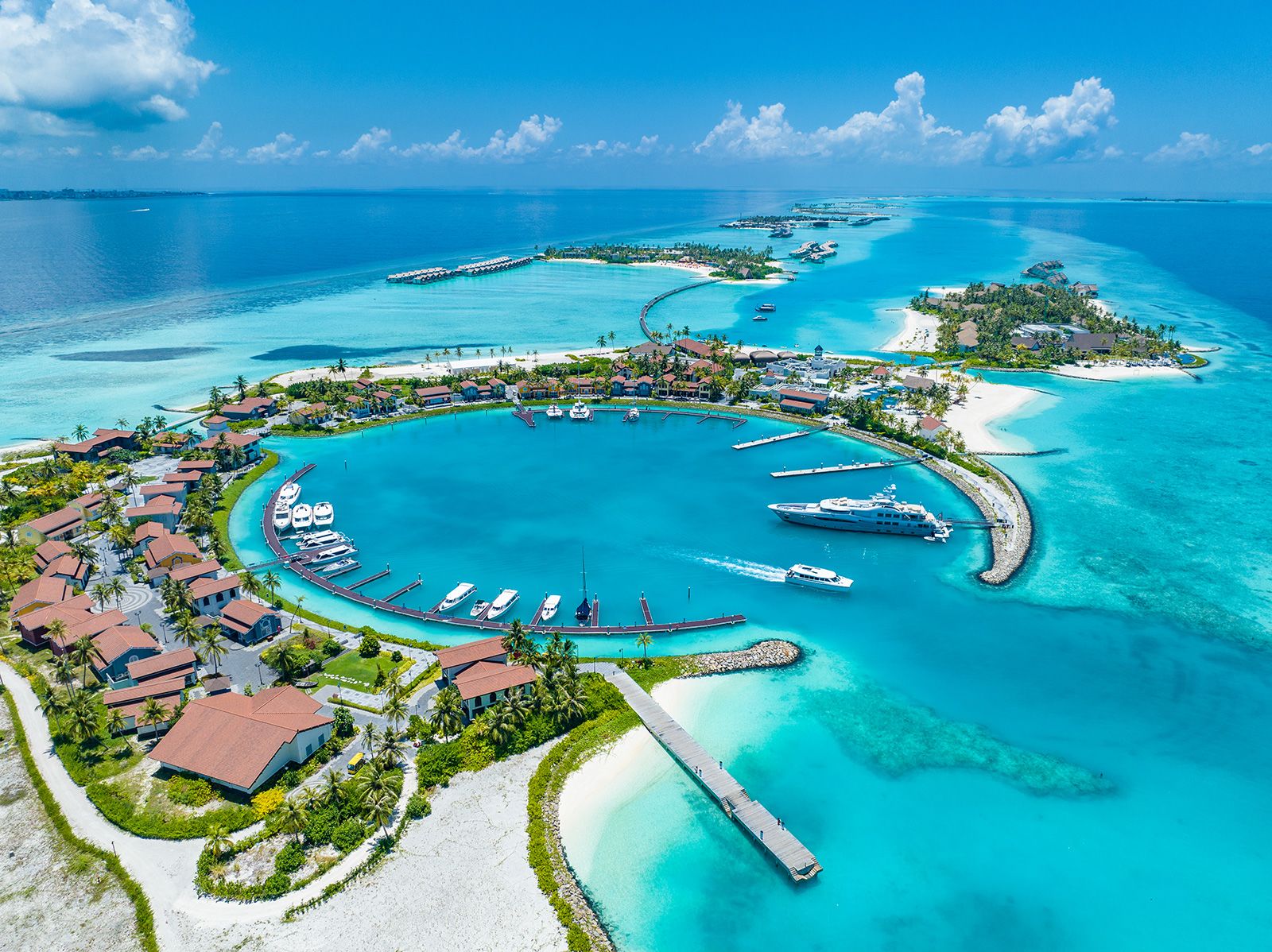
The Maldives, an idyllic archipelago located in the Indian Ocean, is renowned for its stunning beaches, crystal-clear waters, and vibrant marine life. Comprising around 1,190 coral islands grouped into 26 atolls, this tropical paradise is a popular destination for travelers seeking luxury, relaxation, and adventure. With a population of approximately 540,000 people, the Maldives offers a unique blend of natural beauty and cultural richness, making it a fascinating place to explore.
Geaography and Climate
The Maldives is situated southwest of Sri Lanka and India, covering an area of about 298 square kilometers. The islands are formed primarily from coral reefs, rising just a few meters above sea level. This low-lying topography contributes to the country’s vulnerability to climate change, particularly rising sea levels.
The climate in the Maldives is tropical, characterized by warm temperatures and high humidity throughout the year. The average temperature ranges between 25°C and 32°C. The monsoon season, which occurs from May to October, brings heavy rainfall and strong winds, while the dry season from November to April is marked by sunny skies and calm seas, making it the peak tourist season.
Cultural Heritage
The cultural heritage of the Maldives is a blend of influences from South Asia, the Middle East, and Africa, shaped by centuries of trade and migration. The predominant religion is Islam, and this significantly influences daily life, traditions, and festivals. The Maldives is known for its unique art forms, including traditional music and dance, as well as intricate handicrafts like lacquer work and woven mats.
Maldivian cuisine reflects the island’s maritime culture, with an emphasis on seafood, coconut, and rice. Dishes such as mas huni (tuna salad) and garudhiya (fish soup) are local favorites. The Maldives also celebrates various festivals, including Eid al-Fitr and Eid al-Adha, marked by communal prayers, feasting, and cultural events.
Nature and Biodiversity
The Maldives is famous for its breathtaking natural beauty, characterized by white sandy beaches, turquoise lagoons, and lush palm trees. The coral reefs surrounding the islands are among the most diverse in the world, providing habitats for an array of marine species. The archipelago is home to over 2,000 species of fish, 200 species of coral, and various sea turtles and sharks, making it a top destination for snorkeling and scuba diving enthusiasts.
The Maldives also places a strong emphasis on conservation. Several marine protected areas and national parks, such as the Baa Atoll Biosphere Reserve, work to preserve the delicate ecosystems and biodiversity that are vital to the country’s environment and economy.
Economy
The Maldivian economy is heavily reliant on tourism, which accounts for a significant portion of GDP and employment. The country attracts millions of visitors each year, drawn by its luxury resorts, water sports, and natural beauty. Fishing, particularly tuna fishing, is another vital economic activity, contributing to both domestic consumption and exports.
Agriculture plays a minor role in the economy, as the arable land is limited. The government has been working to diversify the economy, focusing on sectors such as renewable energy and information technology to reduce dependence on tourism and fishing.
Conclusion
In conclusion, the Maldives is a stunning paradise that captivates visitors with its natural beauty, rich cultural heritage, and vibrant marine ecosystems. While tourism drives the economy and provides livelihoods for many, the country faces challenges such as climate change and environmental sustainability. As the Maldives navigates these challenges, it remains committed to preserving its unique identity and natural resources, ensuring that this enchanting archipelago continues to be a haven for future generations. The combination of its breathtaking landscapes and rich culture makes the Maldives a truly remarkable destination in the Indian Ocean.