Demonym: Butanese
Capital City: Thimphu
Coordiantes: 27°28.0′N 89°38.5′E
Population: 777,000
HDI (Human Development Index): 0.681
GDP (Nominal): $2.686bil
Bhutan, a small landlocked kingdom nestled in the eastern Himalayas, is renowned for its breathtaking landscapes, rich cultural heritage, and commitment to preserving its unique identity. Often referred to as the "Land of the Thunder Dragon," Bhutan offers a harmonious blend of tradition and modernity, making it a fascinating destination for travelers seeking an authentic experience.
Geaography and Climate
Covering approximately 38,394 square kilometers, Bhutan is bordered by China to the north and India to the south. The country’s topography is characterized by steep mountains, deep valleys, and fast-flowing rivers. The northern region is dominated by the rugged peaks of the Himalayas, including Gangkhar Puensum, the country’s highest mountain. The geography not only shapes the culture and livelihoods of its people but also contributes to Bhutan's ecological diversity.
The climate in Bhutan varies significantly with altitude. The southern foothills experience a subtropical climate, with hot summers and mild winters, while the central regions have a temperate climate. The northern highlands are cold and alpine, with heavy snowfall during winter. Monsoon rains occur from June to September, replenishing the rivers and supporting agriculture but also bringing challenges such as landslides.
Cultural Heritage
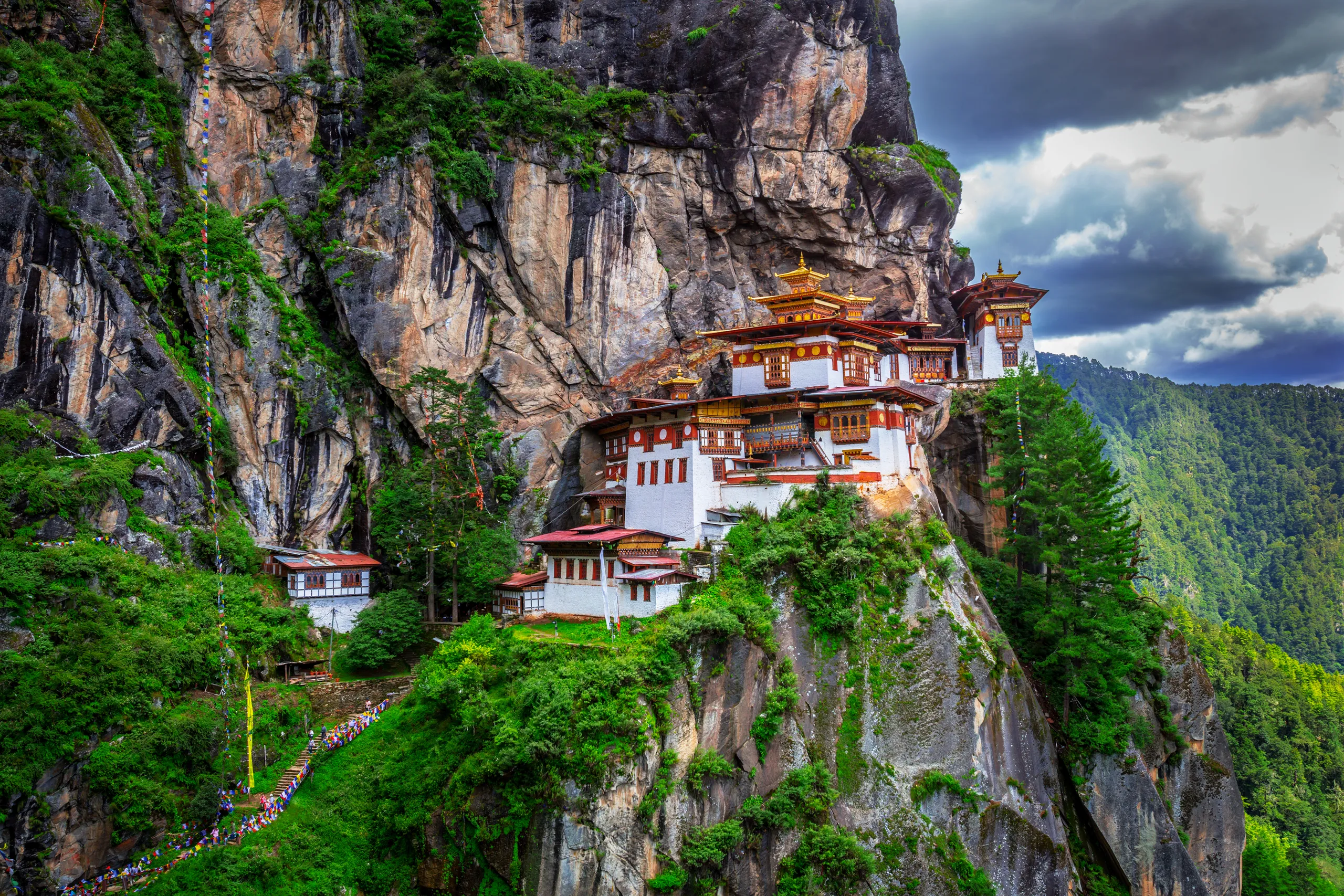
Bhutan's cultural heritage is deeply rooted in its Buddhist traditions, which permeate daily life and governance. The country is home to numerous monasteries, stupas, and dzongs (fortresses) that reflect its spiritual and architectural legacy. One of the most iconic landmarks is the Paro Taktsang, or Tiger's Nest Monastery, perched dramatically on a cliffside.
The Bhutanese people take immense pride in their cultural practices, from traditional dress to festivals. The national dress, comprising the gho for men and the kira for women, is worn with great pride. Major festivals, such as Tsechu, celebrate religious and historical events with vibrant dances, music, and colorful attire, attracting both locals and tourists.
Bhutan is also known for its commitment to Gross National Happiness (GNH), a unique development philosophy that prioritizes the well-being of its citizens over mere economic growth. This approach reflects the country’s cultural values, emphasizing community, spirituality, and environmental sustainability.
Nature and Biodiversity
Bhutan's natural beauty is unparalleled, with diverse landscapes ranging from lush subtropical forests to alpine meadows. The country is home to a rich array of flora and fauna, including many endemic and endangered species. National parks and protected areas, such as Jigme Dorji National Park and Phobjikha Valley, play a vital role in conservation efforts.
The biodiversity in Bhutan is significant due to its varying altitudes and climates. Iconic species such as the takin (the national animal), snow leopards, and various species of pheasants inhabit its forests and mountains. Bhutan is also part of the Eastern Himalaya biodiversity hotspot, recognized for its exceptional plant and animal diversity.
Economy
Bhutan's economy is primarily agrarian, with agriculture employing around two-thirds of the population. Rice, maize, and barley are staple crops, while the country is also known for its production of organic products, including high-quality rice and medicinal herbs.
Hydropower is a key component of Bhutan's economy, with the country generating surplus electricity that is exported to neighboring India. The tourism sector has also grown significantly, with a focus on sustainable and high-value tourism that aligns with the country’s GNH philosophy. The government promotes a limited number of visitors to preserve its culture and environment.
Conclusion
In conclusion, Bhutan is a nation that harmoniously blends breathtaking natural landscapes, rich cultural traditions, and a unique approach to development. Its commitment to preserving its identity while embracing modernity makes it a model for sustainable living. As Bhutan continues to navigate the challenges of a changing world, it remains a treasure trove of beauty and cultural richness, inviting those who seek to experience its enchanting spirit.