Demonym: Turkmen
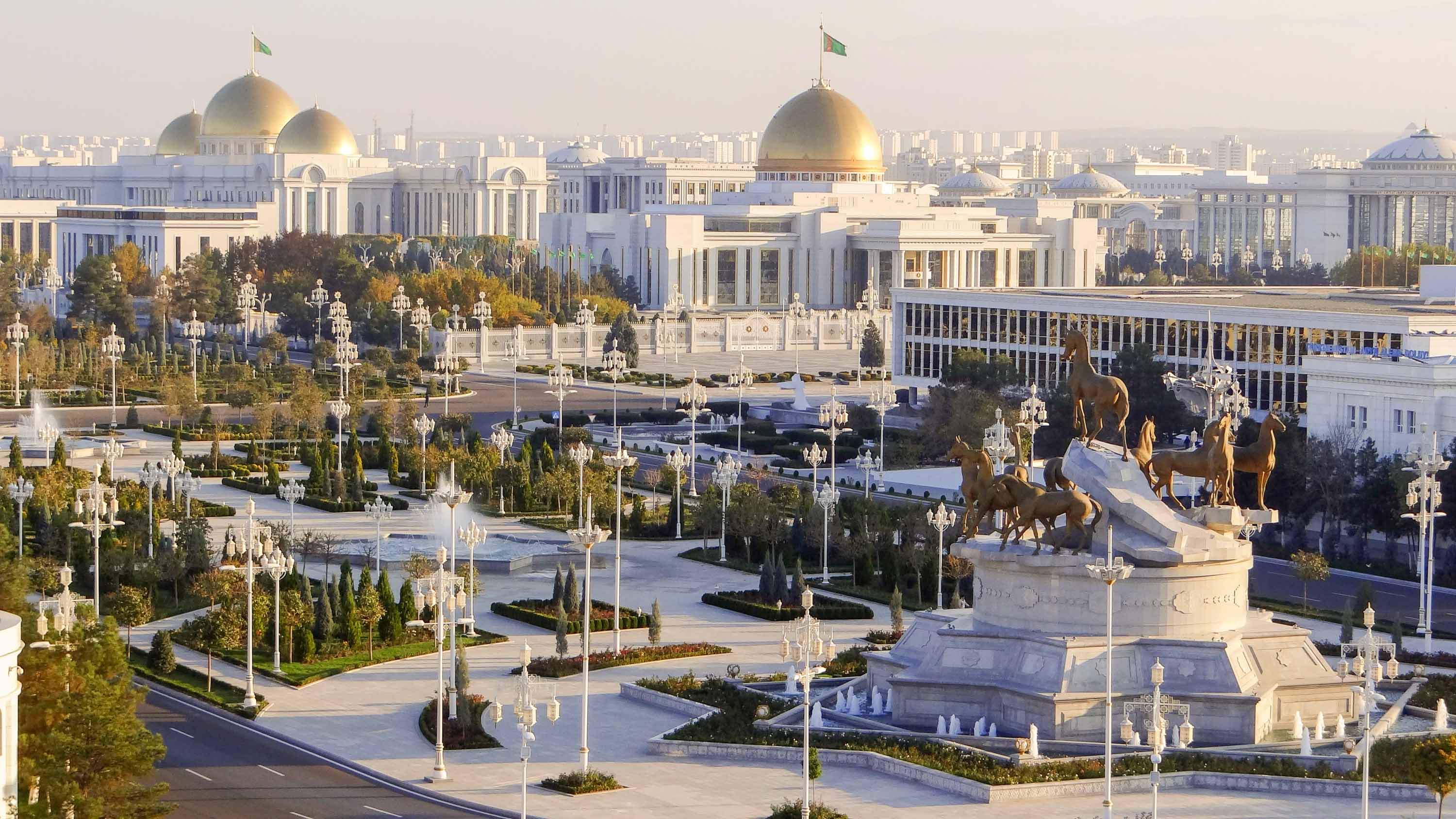
Capital City: Ashgabat
Coordiantes: 37°58′N 58°20′E
Population: 8 million
HDI (Human Development Index): 0.744
GDP (Nominal): $81.822bil
Turkmenistan, a central Asian country bordered by the Caspian Sea to the west, Iran to the south, Afghanistan to the southeast, Uzbekistan to the east, and Kazakhstan to the north, is known for its unique blend of ancient history and vast natural resources.
Covering an area of approximately 491,200 square kilometers, it is one of the largest countries in Central Asia, yet it remains one of the least visited due to its strict visa regulations and limited infrastructure for tourism.
Geography and Climate
The landscape of Turkmenistan is predominantly arid, featuring the vast Karakum Desert, which covers around 70% of the country.
The desert is characterized by shifting sands, salt flats, and rugged mountains, including the Kopet Dag range along the border with Iran.
Notable geographical features include the Caspian Sea coastline and the Garabogazkol Bay, known for its high salinity.
Turkmenistan has a continental climate, with hot summers and mild winters.
Summer temperatures can soar above 40°C, especially in the desert regions, while winters can bring colder weather, particularly in the northern areas.
The climate significantly influences the lifestyle of its people, with many residing in the more temperate mountainous regions.
Cultuiral Heritage
Turkmenistan has a rich cultural heritage that reflects its history as a crossroads of various civilizations along the ancient Silk Road.
The Turkmen people, primarily Turkic in origin, are known for their traditional crafts, particularly carpet weaving, which is an integral part of their cultural identity.
Turkmen carpets, known for their intricate patterns and vibrant colors, are highly prized worldwide.
The country is also known for its rich oral literature, music, and dance, which play a vital role in preserving cultural traditions.
The annual Turkmen Carpet Festival showcases the artistry and craftsmanship of Turkmen weavers and is a celebration of national pride.
Political Structure and Economy
Turkmenistan is a presidential republic, gaining independence from the Soviet Union in 1991.
The political landscape is characterized by strong presidential authority, with limited political pluralism and a controlled media environment.
Gurbanguly Berdimuhamedow, who succeeded Saparmurat Niyazov, has continued to maintain a tight grip on power, promoting a cult of personality and an agenda of national development.
The economy is heavily reliant on natural gas, with Turkmenistan possessing some of the largest reserves in the world.
The country is a major exporter of gas to neighboring countries, particularly through pipelines to China.
Agriculture also plays a crucial role, with cotton being a significant cash crop, alongside wheat and livestock.
Natural Beauty and Biodiversity
Turkmenistan is home to diverse natural landscapes, including the picturesque Yangykala canyons and the surreal Darvaza gas crater, often referred to as the "Door to Hell," which has been burning since 1971.
The country boasts several national parks that protect its unique flora and fauna, including the Caspian Seal and various migratory bird species.
Conclusions
Turkmenistan is a country of striking contrasts, where ancient traditions blend with modern aspirations.
Its rich cultural heritage, vast natural resources, and breathtaking landscapes create a unique identity in Central Asia.
As Turkmenistan continues to develop its economy and infrastructure, it offers an intriguing destination for those seeking to explore its history, culture, and natural wonders.
The warmth of its people and the allure of its landscapes make Turkmenistan a captivating place for adventurous travelers and cultural enthusiasts alike.