Demonym: Kazakh
Capital City: Astana
Coordiantes: 51°10′N 71°26′E
Population: 20.1 million
HDI (Human Development Index): 0.802
GDP (Nominal): $296.74bil
Kazakhstan, the largest country in Central Asia and the ninth largest in the world, is known for its vast steppes, rich cultural heritage, and significant natural resources.
Covering an area of approximately 2.7 million square kilometers, it shares borders with Russia to the north, China to the east, Kyrgyzstan, Uzbekistan, and Turkmenistan to the south, and the Caspian Sea to the west.
With a population of around 19 million, Kazakhstan is ethnically diverse, comprising Kazakhs, Russians, Uzbeks, and various other groups.
Geography and Climate
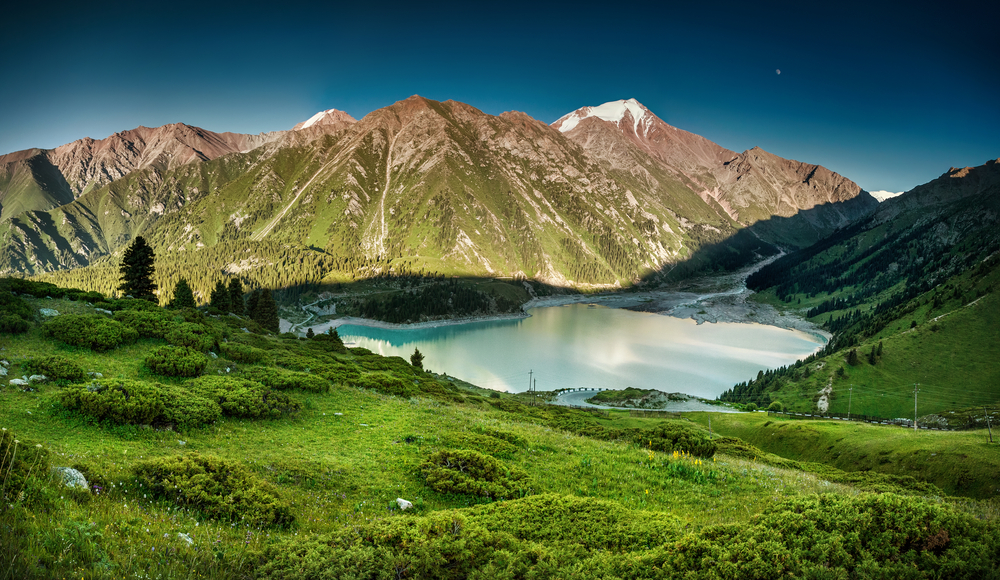
Kazakhstan's geography is characterized by its expansive plains, mountains, and deserts.
The country features the vast Kazakh Steppe, which stretches across much of its territory, interspersed with significant mountain ranges such as the Altai Mountains in the northeast and the Tien Shan range in the southeast.
The Caspian Sea, the world's largest enclosed inland body of water, lies to the west.
Kazakhstan experiences a continental climate, marked by extreme temperature variations.
Winters can be brutally cold, especially in the northern regions, with temperatures often dropping below -30°C, while summers can be hot, with temperatures exceeding 40°C in the south.
The best time to visit is during spring and autumn when the weather is more temperate.
Cultuiral Heritage
Kazakhstan has a rich cultural tapestry that reflects its history as a crossroads of various civilizations.
The nomadic lifestyle of the Kazakhs has shaped their cultural practices, evident in their traditional music, art, and hospitality.
The country is famous for its yurts, portable tents used by nomadic tribes, which symbolize the nomadic heritage of the Kazakh people.
The oral tradition is significant in Kazakh culture, with epic poetry and storytelling playing a vital role.
The "Kyz-Zhibek" and "Manas" epics are among the most renowned, recounting tales of bravery, love, and the Kazakh spirit.
Traditional music, performed with instruments such as the dombra (a two-stringed lute) and the kobyz (a bowed instrument), is integral to cultural celebrations.
Political Structure and Economy
Kazakhstan is a republic with a presidential system. Since gaining independence from the Soviet Union in 1991, the country has made significant strides in establishing a stable political environment and developing its economy.
The current president, Kassym-Jomart Tokayev, succeeded Nursultan Nazarbayev, who served for nearly three decades.
The economy of Kazakhstan is diverse and resource-rich, heavily reliant on oil, gas, and mineral exports.
The country is one of the world’s leading producers of uranium and has significant reserves of coal, copper, and gold.
Agriculture also plays a vital role, with wheat, barley, and livestock being key products.
Natural Beauty and Biodiversity
Kazakhstan is home to diverse natural landscapes, including steppes, mountains, and deserts.
The Charyn Canyon, often compared to the Grand Canyon, offers breathtaking views and hiking opportunities.
The country has numerous national parks, such as Altyn Emel and Burabay, that protect its unique ecosystems and wildlife, including the elusive snow leopard and the saiga antelope.
Conclusions
Kazakhstan is a country of remarkable contrasts, where ancient nomadic traditions coexist with modern aspirations.
Its vast landscapes, rich cultural heritage, and resilient people create a unique identity in Central Asia.
As Kazakhstan continues to develop economically and politically, it remains an inviting destination for travelers seeking adventure, cultural experiences, and an appreciation of its rich history.
The warmth of its people and the beauty of its diverse landscapes make Kazakhstan a captivating place to explore and discover.